My blog

Author name: admin

Hotel management graduate working in cruise line hospitality
The GIHM

Cruise Line Careers After Hotel Management

Hotel Management Career in Cruise Lines: Skills & Opportunities A hotel management career in cruise lines can be an exciting option for students who enjoy hospitality, international travel, guest interaction, and multicultural work environments. Cruise ships operate much like floating hospitality destinations, combining accommodation, restaurants, entertainment, recreation, guest services, and other experiences under one roof. For hotel management graduates, this creates opportunities to apply familiar hospitality skills in a different and highly dynamic environment. From food and beverage service and housekeeping to guest relations and front office operations, many of the skills learned during hotel management education can be valuable onboard cruise ships. The National Council for Hotel Management and Catering Technology (NCHMCT) itself lists shipping and cruise lines among the career opportunities available to hospitality graduates. Its B.Sc. Hospitality and Hotel Administration curriculum also covers areas such as Food Production, Food & Beverage Service, Front Office Operations and Housekeeping. If you are considering working internationally and want a career that combines hospitality with travel, cruise line careers can be worth exploring. Why Choose Cruise Line Careers After Hotel Management? Cruise ships bring together many different hospitality functions in one workplace. A guest may stay in a cabin, dine at multiple restaurants, participate in activities, use recreational facilities and interact with guest service teams—all during the same journey. This means cruise companies need professionals who understand service standards and can work efficiently with guests from different backgrounds. Some major reasons students consider cruise line careers include: International work exposure Multicultural workplace experience Opportunities to interact with international guests Exposure to different hospitality departments Development of communication and customer-service skills Opportunities to build an international hospitality profile Experience working in a fast-paced environment Potential career progression within global hospitality companies However, students should also understand that shipboard employment is demanding. Employees may work long hours, follow structured schedules and spend extended periods away from home. Therefore, cruise employment is best suited to people who genuinely enjoy hospitality and can adapt to life onboard. What Does a Hotel Management Professional Do on a Cruise Ship? The exact responsibilities depend on the department and job position. Unlike a traditional hotel, a cruise ship combines hotel operations with maritime travel and entertainment. Hotel operations can include: Guest services Front office activities Food and beverage operations Housekeeping Laundry Restaurants Bars and lounges Guest relations Shore excursion support Recreation and entertainment support Retail and other guest-facing services For example, Carnival Cruise Line currently describes its hotel operations as covering areas including Food & Beverage Operations, Housekeeping and Laundry, Guest Services, Shore Excursions and Photo. This demonstrates how broad hospitality operations can be onboard a modern cruise ship. Top Cruise Line Career Opportunities for Hotel Management Graduates A hotel management qualification does not limit you to one specific cruise position. Your specialization, practical experience, communication ability and previous work experience can influence the roles you are suitable for. 1. Guest Services Executive Guest services professionals are often among the first people passengers approach when they need assistance. Typical responsibilities may include: Handling guest queries Providing information about ship facilities Assisting with complaints Supporting check-in and check-out processes Coordinating guest requests Providing information about activities and schedules Maintaining professional communication with passengers Strong communication and problem-solving abilities are particularly important for this role. 2. Front Office Roles Front office experience from a hotel can be relevant to cruise ship operations. Depending on the employer and position, responsibilities can include: Guest registration Account-related assistance Reservation support Guest information Handling requests Coordinating with other departments Front office professionals need to remain calm and professional even when dealing with busy periods or difficult guest situations. 3. Food and Beverage Service Food and beverage is one of the largest areas of hospitality operations on many cruise ships. Possible roles can include: Restaurant service staff Waiters Food and beverage attendants Bar service staff Restaurant supervisors F&B management positions with experience Professionals may work in restaurants, specialty dining venues, lounges, cafés or other food-service areas. Students who enjoy direct guest interaction and fast-paced service environments may find this department particularly suitable. 4. Food Production and Culinary Roles Hotel management students with a strong interest in food production can explore culinary opportunities in cruise hospitality. Depending on qualification and experience, positions can range from entry-level kitchen roles to supervisory and management positions. Important areas include: Food preparation Kitchen hygiene Food safety Mise en place Cooking techniques Portion control Kitchen coordination Inventory management NCHMCT’s hospitality education framework includes practical training in Food Production, making this an important foundation for students interested in culinary hospitality. 5. Housekeeping and Accommodation Services Housekeeping is another important area of cruise hospitality. Accommodation teams help maintain guest cabins and public areas according to required cleanliness and service standards. Responsibilities may involve: Cabin preparation Cleaning and maintenance coordination Linen management Guest requests Public-area housekeeping Coordination with maintenance and other departments Students interested in accommodation operations can develop useful skills through hotel internships before applying for cruise positions. 6. Guest Relations Guest relations is particularly important in an international environment. Professionals in this area need to understand different guest expectations and respond appropriately to questions, concerns and special requests. A successful guest-relations professional should be: Patient Polite Confident Well-spoken Solution-oriented Culturally aware This is one area where strong personality development and communication training can make a significant difference. Skills Needed for Cruise Line Careers Working onboard is different from working in a conventional hotel. Hospitality knowledge is important, but employers also look for adaptability and strong interpersonal abilities. Communication Skills Cruise employees interact with guests and colleagues from many countries. Clear communication helps professionals: Understand guest requirements Explain services Resolve misunderstandings Coordinate with colleagues Handle complaints professionally English communication is especially valuable in international hospitality environments. Customer Service Skills Guests expect professional service throughout their journey. Employees need to understand how to create positive experiences while maintaining professionalism during challenging situations. Customer service involves more than simply being polite. It requires listening, understanding the problem and finding an appropriate solution. Teamwork A

Career opportunities in event management after hotel management
The GIHM

Event Management After Hotel Management: Career Guide

Career Opportunities in Event Management After Hotel Management A hotel management qualification can lead to much more than a traditional hotel job. One of the exciting career directions graduates can explore is event management after hotel management. Students who enjoy planning, communication, guest interaction, teamwork, creativity, and fast-paced work environments can find event-related careers especially interesting. Events require many of the same skills that hospitality professionals develop during their education and practical training. Managing guests, coordinating teams, maintaining service standards, organizing food and beverages, handling schedules, and solving problems under pressure are all important in both hospitality and events. From weddings and corporate conferences to exhibitions, product launches, social celebrations, festivals, and destination events, the event industry offers a wide variety of career opportunities. For hotel management graduates, the transition can be relatively natural because their education already provides a foundation in customer service, operations, communication, food and beverage, Front Office, housekeeping, and event-related hospitality activities. Why Choose Event Management After Hotel Management? Hotel management students develop several skills that are directly useful in event management. These include: Guest handling Communication Team coordination Time management Food and beverage knowledge Service management Problem-solving Professional grooming Hospitality operations Customer relationship management The GIHM itself lists event management among the career areas available to hotel management graduates. This means students do not necessarily have to limit themselves to hotels after completing their qualification. If you enjoy planning experiences rather than managing routine hotel operations, event management can provide an alternative career direction. What Is Event Management? Event management involves planning, organizing, coordinating, executing, and evaluating events. An event may be small, such as a private celebration, or large, such as a corporate conference involving hundreds or thousands of attendees. Event professionals may work on: Event planning Venue selection Guest management Catering Décor coordination Vendor management Event logistics Entertainment Registration Hospitality Event marketing On-site operations Post-event evaluation The exact responsibilities depend on the event company, role, and type of event. How Hotel Management Prepares You for Event Careers Hotel management education gives students exposure to several operational areas that can be valuable in events. Food & Beverage Food and beverage knowledge is particularly useful for weddings, conferences, parties, corporate events, and large gatherings. A hotel management graduate may understand: Banquet service Menu planning Table setup Service standards Guest requirements Food presentation Catering coordination Front Office and Guest Service Event attendees often need assistance with registration, directions, seating, accommodation, schedules, and general enquiries. Front Office training can therefore help graduates develop professional guest-handling skills. Housekeeping Large events require attention to cleanliness, venue presentation, guest areas, and operational coordination. Housekeeping knowledge can help professionals understand service standards and presentation requirements. Communication Events involve constant coordination between clients, vendors, employees, venues, guests, entertainers, caterers, and other stakeholders. Strong communication can therefore be one of the most important skills for an event professional. Top Career Opportunities in Event Management After Hotel Management Hotel management graduates can explore different event-related roles depending on their interests and experience. 1. Event Coordinator An Event Coordinator helps organize and execute events according to the client’s requirements. Responsibilities may include: Coordinating vendors Managing event schedules Communicating with clients Coordinating event staff Supporting venue preparation Monitoring event activities Handling guest requirements This can be a suitable entry-level role for graduates who want to gain broad event experience. 2. Event Executive An Event Executive may assist with planning and execution from the initial preparation stage through the event day. Typical responsibilities can include: Preparing event plans Coordinating suppliers Communicating with clients Managing schedules Supporting logistics Assisting with budgets Coordinating staff The role can provide exposure to multiple aspects of event management. 3. Wedding Planner Wedding planning is one of the most visible areas of the events industry. Wedding planners may coordinate: Venues Catering Décor Entertainment Guest arrangements Photography Invitations Transportation Vendor schedules Wedding-day operations Hotel management graduates with strong guest-service and hospitality skills can explore this field. However, wedding planning also requires creativity, negotiation, organization, patience, and the ability to manage emotional or high-pressure situations. 4. Banquet Executive Banquet operations are closely connected to hotel management. A Banquet Executive may coordinate: Corporate events Weddings Conferences Social functions Private celebrations Food service Venue setup Guest requirements This role can be a particularly natural transition for hotel management graduates because banquet operations combine hospitality and event execution. 5. Corporate Event Coordinator Corporate events can include: Conferences Seminars Meetings Product launches Award ceremonies Team-building events Business networking events Exhibitions Corporate event professionals need strong organizational and communication skills because schedules, client expectations, and professional standards can be demanding. 6. Exhibition and Conference Coordinator Exhibitions and conferences require detailed planning. Professionals may coordinate: Exhibitor requirements Registration Venue setup Guest movement Conference schedules Stage arrangements Audio-visual requirements Vendor coordination Hotel management graduates can use their hospitality and service knowledge in these environments. 7. Event Sales Executive Not every event career is focused on physical event execution. Sales professionals help event companies attract and convert clients. Responsibilities may include: Finding potential clients Preparing proposals Explaining event packages Conducting meetings Negotiating requirements Following up with prospects Maintaining client relationships Graduates with strong communication and business interests may find this career path suitable. 8. Event Operations Executive Event Operations Executives focus on making sure the event runs smoothly on the actual day. They may coordinate: Staff Vendors Venue Catering Guest services Timelines Equipment Event activities This can be a fast-paced role that requires quick decision-making. 9. Destination Wedding Coordinator Destination weddings combine hospitality, tourism, travel, and event management. Professionals may work with couples and families who travel to another city, state, or country for their wedding. The role may involve coordinating: Accommodation Transportation Venues Catering Décor Entertainment Guest activities Wedding schedules A hotel management background can be valuable because accommodation and guest experience are major parts of destination weddings. 10. MICE Event Professional MICE stands for Meetings, Incentives, Conferences, and Exhibitions. This is an important area of business events. Professionals in this field may coordinate corporate groups, conferences, exhibitions, incentive trips, and

Career options in resort management after hotel management
The GIHM

Resort Management After Hotel Management: Guide

Career Options in Resort Management After Hotel Management A career in hospitality does not have to begin and end with traditional hotels. For students who enjoy travel, guest interaction, nature, luxury experiences, events, and dynamic work environments, Resort Management After Hotel Management can be an exciting career direction. Resorts combine many areas of hospitality, including accommodation, food and beverage, recreation, guest services, events, housekeeping, wellness, and sometimes tourism activities. This means hotel management graduates can apply their skills across several departments while developing a broad understanding of hospitality operations. The National Council for Hotel Management and Catering Technology (NCHMCT) also lists resort management among the career opportunities available to hospitality graduates. For a student considering this career path, the key question is not simply whether resorts offer jobs. It is understanding which roles are available, what skills are required, how to enter the industry, and how a resort career can develop over time. What Is Resort Management? Resort management involves managing and coordinating the services and operations of a resort property. Unlike a conventional city hotel, a resort may provide a broader guest experience. Depending on the property, guests may visit for: Holidays Family vacations Weddings Corporate retreats Wellness experiences Adventure activities Nature tourism Destination events Leisure travel Long stays A resort therefore requires professionals who can manage accommodation, guest services, restaurants, housekeeping, recreation, events, and other operations. Hotel management graduates can use their knowledge of hospitality operations to enter different departments within this environment. Why Choose Resort Management After Hotel Management? Choosing Resort Management After Hotel Management can be suitable for students who want a career that combines hospitality operations with leisure and travel experiences. Some potential advantages include: Exposure to multiple hospitality departments Interaction with domestic and international guests Opportunities in leisure destinations Experience in guest-experience management Exposure to events and recreation Opportunities to develop leadership skills Potential to work with luxury hospitality brands Opportunities to specialize in resort operations Resort careers can also be diverse because every property has its own operational model. A beach resort may focus heavily on leisure activities, restaurants, and guest experiences. A mountain resort may combine accommodation with adventure tourism. A wellness resort may emphasize spa services, health experiences, and specialized guest programs. How Hotel Management Prepares You for Resort Careers Hotel management education provides a foundation in the core areas required for hospitality operations. Students generally develop knowledge of areas such as: Front Office Food Production Food & Beverage Service Housekeeping Guest Relations Hospitality operations Communication Customer service Professional grooming Teamwork These skills can be transferred to resort environments. For example, a Front Office graduate can work in resort guest services, while a Food & Beverage graduate can pursue restaurant or banquet operations within a resort. GIHM’s Bachelor’s in Hotel Management covers Front Office, Food & Beverage Service, Housekeeping, and Food Production, along with communication, personality development, interview skills, and industrial training. Students interested in building this foundation can explore The Global Institute of Hotel Management to learn more about its hotel management programs. Top Career Options in Resort Management After completing hotel management, graduates can explore several resort-related positions. 1. Resort Operations Executive A Resort Operations Executive may assist with the daily functioning of different resort operations. Responsibilities can involve: Coordinating with departments Supporting guest services Monitoring operational requirements Handling guest requests Communicating with supervisors Supporting service standards This can be a useful starting point for graduates who want broad exposure to resort operations. 2. Front Office Executive The Front Office is one of the most visible departments in a resort. Front Office professionals may handle: Guest check-in Guest check-out Reservations Guest enquiries Information requests Complaint coordination Communication with other departments Because resort guests may stay for several days, guest interaction can be an important part of the role. Strong communication and problem-solving skills are therefore valuable. 3. Guest Relations Executive Guest Relations professionals focus heavily on the guest experience. Their work may include: Welcoming guests Handling special requests Coordinating guest services Addressing concerns Supporting VIP guests Collecting guest feedback Coordinating with operational departments This role can be particularly suitable for students who enjoy communication and customer interaction. 4. Food & Beverage Professional Resorts often operate multiple food and beverage outlets. Depending on the property, these may include: Restaurants Cafes Bars Banquet facilities Poolside dining Room service Specialty restaurants Hotel management graduates trained in Food & Beverage Service can explore positions in these areas. With experience, professionals may progress toward supervisory and managerial responsibilities. 5. Housekeeping Professional Housekeeping is essential to the guest experience. In a resort, housekeeping may cover more than guest rooms. Depending on the property, professionals can also be involved in: Public areas Villas Suites Recreation areas Linen operations Guest amenities Cleanliness standards A strong understanding of hygiene, organization, attention to detail, and team coordination is important. 6. Food Production Professional Students interested in culinary operations can build careers in resort kitchens. Possible areas include: Main kitchen Specialty restaurants Bakery Pastry Banquets Room service Outdoor events Staff meals Resorts may cater to a wide variety of guest preferences, making culinary adaptability valuable. 7. Banquet and Events Executive Many resorts host weddings, conferences, corporate retreats, celebrations, and private events. A Banquet or Events professional may assist with: Event setup Guest coordination Food service Venue preparation Vendor coordination Event schedules Guest requirements This career path can be particularly attractive to graduates who enjoy event planning and fast-paced environments. 8. Recreation and Guest Experience Roles Large resorts may have recreation facilities and activities designed around guest entertainment. Depending on the resort, these could involve: Swimming-pool activities Kids’ activities Sports Outdoor experiences Entertainment Leisure programs Hospitality graduates with strong communication and organizational skills may explore guest-experience roles in these areas. 9. Resort Sales and Marketing Resorts also require professionals who can attract guests and business. Sales and marketing activities may focus on: Corporate bookings Weddings Events Travel agencies Group bookings Destination packages Digital marketing Partnerships Graduates with communication, sales, and marketing interests can consider this direction after gaining relevant hospitality

Internship vs Job After Hotel Management for freshers
The GIHM

Internship vs Job After Hotel Management: Guide

Internship vs Job After Hotel Management: Which Should You Choose? Completing a hotel management course is an exciting milestone, but it also brings an important career decision: should you choose an internship or start looking for a full-time job? Understanding Internship vs Job After Hotel Management can help freshers make a practical decision based on their experience, skills, career goals, and readiness for professional responsibilities. Some students finish their course with strong practical exposure and feel ready to apply directly for jobs. Others may have limited industry experience and can benefit from additional structured training before taking a permanent position. There is no single answer that works for every hotel management graduate. The right choice depends on where you currently stand professionally and what you want to achieve next. An internship can help you gain industry exposure, understand hotel operations, and build confidence. A full-time job can provide greater responsibility, professional experience, and the opportunity to establish yourself in the hospitality industry. What Is an Internship After Hotel Management? An internship is a structured period of practical learning in a professional hospitality environment. During an internship, a student or recent graduate gets an opportunity to observe and participate in real hotel operations under the guidance of experienced professionals. Depending on the hotel and department, an intern may receive exposure to: Front Office operations Food & Beverage Service Food Production Housekeeping Guest relations Restaurant operations Reservations Hotel administration Events and banquets Customer service The exact responsibilities vary according to the organization, department, and internship program. The main objective is to convert academic knowledge into practical workplace skills. What Is a Full-Time Job After Hotel Management? A full-time hospitality job involves taking on professional responsibilities as an employee of a hotel, resort, restaurant, hospitality company, or another organization. Freshers may begin in entry-level positions depending on their qualification, practical experience, skills, and the employer’s requirements. Potential roles include: Front Office Executive Guest Relations Executive Food & Beverage Service Associate Housekeeping Associate Kitchen Trainee Commis Restaurant Associate Banquet Associate Guest Service Associate Reservations Executive A full-time role provides an opportunity to apply your training while learning through day-to-day professional responsibilities. Internship vs Job After Hotel Management: Key Difference The simplest difference is the primary purpose. Internship: Mainly focuses on learning, exposure, and developing practical skills. Job: Focuses on professional responsibilities, performance, and contributing to the organization as an employee. However, the difference is not always completely black and white. A good entry-level job can involve substantial learning, while a well-structured internship can give you meaningful practical responsibilities. The important question is not simply whether one is better. The question is: Which option is better for your current level of preparation? Internship vs Job After Hotel Management for Freshers Freshers often face this decision because they have completed their academic qualification but may not know whether their practical experience is enough to start working. Consider an internship if: You have limited industry exposure. You want to explore different hotel departments. You are unsure about your specialization. You want to improve your professional confidence. You need more practical experience. You want to understand hotel operations before committing to a long-term role. Consider a full-time job if: You already have substantial practical exposure. You have completed relevant industrial training. You understand the responsibilities of your target department. You feel comfortable working with guests and colleagues. You are prepared for professional schedules and responsibilities. You have identified the hospitality area you want to pursue. How an Internship Can Help Your Career An internship can be valuable because hospitality is an operational industry. You may learn things in a working hotel environment that are difficult to understand completely in a classroom. For example, you may understand how: Guests communicate their expectations. Teams coordinate during busy periods. Departments depend on one another. Service standards are maintained. Problems are handled professionally. Employees manage pressure. Communication changes according to the situation. Hotel operations work during different shifts. These experiences can improve your understanding of the industry. Internship Helps Build Professional Confidence Many freshers know the theory but feel nervous when they enter a real hotel. An internship can reduce this gap. You may initially feel uncomfortable interacting with guests, communicating with senior staff, or handling unfamiliar situations. With regular exposure, these activities can become more natural. You can gradually improve your: Communication Grooming Confidence Teamwork Customer handling Time management Problem-solving Professional behavior These qualities can become valuable when you later apply for permanent positions. Internship Can Help You Choose a Department Hotel management offers multiple career paths. You may initially believe that Front Office is right for you but discover during practical exposure that you enjoy Food & Beverage Service more. Similarly, someone interested in Food Production may discover a stronger interest in hotel operations or guest relations. An internship allows you to experience professional work before making a long-term decision. This is especially useful for students who are still exploring their strengths. How a Job Can Help Your Career A full-time job gives you the opportunity to transition from being a student into a professional hospitality employee. You can begin developing a professional track record. A job can help you: Gain regular workplace experience Take responsibility for assigned tasks Develop department-specific expertise Build professional relationships Understand organizational processes Improve customer-service skills Learn workplace discipline Develop your professional profile Over time, your experience can help you qualify for more advanced responsibilities. A Job Gives You More Responsibility One important difference in Internship vs Job After Hotel Management is the level of professional accountability. As an employee, you are expected to contribute consistently to the organization. Your responsibilities may include: Serving guests Handling assigned operational tasks Following hotel procedures Coordinating with colleagues Maintaining service standards Completing shift responsibilities Responding appropriately to guest requirements The exact responsibilities depend on the position. This responsibility can accelerate your professional development because you are learning while being accountable for your work. Should You Do an Internship Before Your First Job? For many freshers, an internship

Hotel Management Resume guide for freshers
The GIHM

Hotel Management Interview Questions for Freshers

Hotel Management Job Interview Questions for Freshers Hotel Management Interview Questions are an important part of preparing for your first hospitality job. Completing a hotel management course gives you academic and practical knowledge, but performing well in an interview requires a different set of skills. Recruiters want to know whether you can communicate confidently, work with a team, handle guests professionally, solve problems, and adapt to the fast-paced nature of the hospitality industry. For freshers, an interview can feel stressful because they may not have extensive work experience. However, employers understand that fresh graduates are still developing professionally. Instead of expecting years of experience, interviewers often focus on a candidate’s attitude, communication, basic hotel knowledge, practical training, internship experience, grooming, and willingness to learn. Preparing common Hotel Management Interview Questions before the interview can help students organize their thoughts and answer with greater confidence. Why Are Hotel Management Interviews Important? Hotels are service-oriented businesses where employees interact directly with guests and colleagues. Because of this, recruiters need to evaluate more than academic marks. During an interview, employers may assess: Communication skills Confidence Professional grooming Customer-service attitude Teamwork Problem-solving ability Basic hotel knowledge Time management Adaptability Professional behaviour Willingness to learn The National Council for Hotel Management and Catering Technology includes effective interview techniques, resume writing, group discussion, and employability skills in its student teaching material. This shows why interview preparation should be treated as an important part of hospitality career preparation rather than something students begin only a day before an interview. How Should Freshers Prepare for Hotel Management Interview Questions? Before attending an interview, students should understand the hotel, the job role, and the department for which they are applying. Start by researching: Hotel name and brand Location Type of property Main services Restaurants and facilities Guest profile Job position Department Basic responsibilities You should also revise the fundamentals of hotel operations. For example, if you are applying for a Front Office position, understand reservations, check-in, check-out, guest communication, and basic Front Office responsibilities. If you are applying for Food & Beverage Service, revise restaurant service, guest interaction, table service, hygiene, and professional etiquette. Your preparation should match the position you are applying for. 25 Hotel Management Interview Questions for Freshers Here are some of the most useful Hotel Management Interview Questions that students should practise before appearing for an interview. 1. Tell Me About Yourself. This is often one of the first questions in an interview. Do not give your entire life story. Keep your answer professional and relevant to hospitality. A good introduction can include: Your name Educational background Hotel management qualification Practical training Internship experience Key strengths Career interest Sample Answer “I recently completed my hotel management course, where I gained practical exposure to Front Office, Food & Beverage Service, Housekeeping, and Food Production. During my training, I developed an interest in guest service and Front Office operations. I consider communication and teamwork to be my strengths, and I am looking for an opportunity where I can apply my training and continue learning in a professional hotel environment.” Do not memorize the answer word-for-word. Understand the structure and speak naturally. 2. Why Did You Choose Hotel Management? This question helps the interviewer understand your motivation. You might be interested in: Hospitality Travel Food Customer service Hotels Events Meeting people International careers Hotel operations Sample Answer “I chose hotel management because I enjoy interacting with people and working in a service-oriented environment. During my course, I became particularly interested in hotel operations and guest service. I also like the fact that hospitality offers opportunities to continuously learn and develop professionally.” Your answer should reflect your genuine reason for choosing the field. 3. Why Do You Want to Work in Our Hotel? This question tests whether you researched the employer. Before the interview, learn about the hotel’s: Brand Location Services Restaurants Guest profile Reputation Career opportunities Sample Answer “I am interested in working with your hotel because of its professional hospitality environment and the exposure it can provide to a fresher. I would like to learn from experienced professionals, understand actual hotel operations, and develop my guest-service skills.” Avoid saying only, “Because your hotel is famous.” Show that you have researched the organization. 4. Which Hotel Department Interests You? You can mention departments such as: Front Office Food & Beverage Service Food Production Housekeeping Guest Relations Banquets Events Explain why the department interests you. Sample Answer “I am particularly interested in Front Office because I enjoy communicating with people and solving customer-related problems. I would like to develop my skills in reservations, guest interaction, and hotel coordination.” If you are open to other departments, mention that as well. 5. What Are Your Strengths? Choose strengths that are relevant to hospitality. Good examples include: Communication Patience Teamwork Adaptability Time management Positive attitude Attention to detail Problem-solving Do not simply list five strengths. Give a short example whenever possible. Sample Answer “One of my strengths is staying calm when handling different tasks. During my practical training, I sometimes had to manage multiple responsibilities during busy periods, so I learned to prioritize tasks and communicate with my team.” 6. What Is Your Weakness? Avoid saying: “I have no weaknesses.” Everyone has areas that can be improved. Choose a genuine but manageable weakness and explain what you are doing to improve it. Sample Answer “I used to feel nervous when speaking in front of a large group. During my course, I started participating more in presentations and group activities, which has helped me become more confident.” This shows self-awareness and willingness to improve. 7. Why Should We Hire You? This can be a difficult question for freshers. Do not claim that you are the best candidate. Instead, focus on your: Education Practical training Attitude Communication Willingness to learn Teamwork Sample Answer “As a fresher, I may not have extensive industry experience, but I have completed practical training and understand the basic responsibilities of hotel operations. I am willing to learn, comfortable

Hotel Management for Students Who Want to Work Abroad
The GIHM

Hotel Management for Students Who Want to Work Abroad

Hotel Management for Students Who Want to Work Abroad Hotel Management for Students Who Want to Work Abroad can be an excellent career pathway for students who dream of building an international hospitality career. Hotels, resorts, cruise lines, restaurants, tourism businesses, and other hospitality organizations operate across the world, creating opportunities for trained professionals who have the right education, practical experience, communication skills, and professional attitude. For students in India, hotel management can provide a strong foundation for understanding international hospitality standards. However, studying hotel management does not automatically guarantee an overseas job. International employment depends on factors such as qualifications, skills, experience, employer requirements, language ability, country-specific work authorization, and visa conditions. The good news is that students can start preparing for an international career from the beginning of their hotel management education. Can Hotel Management Students Work Abroad? Yes, hotel management graduates can explore employment opportunities outside India. The hospitality industry is global, and trained professionals may find career opportunities in international hotels, resorts, restaurants, cruise lines, tourism organizations, and other hospitality businesses. The National Council for Hotel Management and Catering Technology (NCHMCT) specifically lists multinational hospitality companies and shipping and cruise lines among the career areas available to hospitality graduates. However, students should understand an important distinction: a hotel management qualification can prepare you for international hospitality careers, but it does not itself provide a work visa or guarantee employment in another country. Each country and employer has its own requirements. Why Choose Hotel Management for a Global Career? Hospitality is naturally international. A hotel professional may work with guests from different countries, collaborate with multicultural teams, follow international service standards, and potentially move between properties or destinations during their career. This makes hotel management particularly interesting for students who enjoy: Meeting new people Travelling Learning about different cultures Customer service Food and beverage Luxury hospitality Events Resorts International business Working in multicultural environments A strong hotel management program can give students exposure to multiple departments rather than limiting them to one narrow career path. What Hotel Management Course Is Best for Working Abroad? There is no single course that guarantees an overseas career. However, students planning for international hospitality should look for a program that combines academic education, practical training, industrial exposure, communication development, and professional skills. Bachelor’s Degree in Hotel Management A bachelor’s degree can provide a broad foundation for students who want to develop their hospitality careers over the long term. The NCHMCT B.Sc. in Hospitality & Hotel Administration is a three-year, six-semester program. The curriculum includes practical training in Food Production, Food & Beverage Service, Front Office Operations, and Housekeeping, along with subjects such as Human Resource Management, Financial Management, Strategic Management, Tourism Marketing, and Tourism Management. The current NCHMCT eligibility requirement for this program is passing 10+2 or an equivalent examination with English as one of the subjects. For students who want to build a long-term hospitality career, a bachelor’s program can provide a wider academic and operational foundation. Diploma in Hotel Management A diploma can be another option for students who prefer a shorter course. The exact duration and curriculum depend on the institute. Students should compare practical training, industrial exposure, curriculum, qualification level, and career support before selecting a program. NCHMCT also offers specialized diploma pathways in hospitality areas such as Front Office Operations. Its Front Office diploma information describes practical training and industrial exposure as part of the program. Certificate Programs Certificate courses can be useful for students seeking shorter, focused training. However, students whose long-term goal is an international hospitality career should carefully compare the qualification level and career scope of a certificate with a diploma or bachelor’s degree. Skills Needed for an International Hotel Career A qualification is only one part of becoming internationally employable. Students should develop a combination of technical, communication, interpersonal, and professional skills. 1. English Communication English is extremely important in international hospitality. Students should become comfortable with: Speaking Listening Reading Writing Professional conversations Guest interaction Telephone communication Email communication Good English communication can help students interact with international guests and multicultural teams. Students may also consider learning an additional foreign language depending on the country or market they want to target. Languages such as French, German, Spanish, Arabic, Mandarin, or Japanese can be useful in certain hospitality markets, although the value of a particular language depends on the destination and employer. 2. Guest Service Skills International hospitality is heavily focused on guest experience. Students should learn how to: Understand guest requirements Handle complaints professionally Communicate politely Solve problems Maintain service standards Manage difficult situations Create positive guest experiences 3. Professional Grooming Professional appearance and behaviour are important across many hospitality environments. Students should develop: Personal grooming Professional body language Confidence Workplace etiquette Punctuality Discipline Positive attitude 4. Teamwork International hotels can have employees from different countries and cultural backgrounds. Students need to learn how to communicate respectfully, coordinate with colleagues, and work effectively as part of a team. 5. Adaptability Working abroad can be very different from studying or working in India. Students may encounter different: Work cultures Food habits Guest expectations Workplace procedures Communication styles Laws and regulations Social customs Adaptability can therefore become an important professional advantage. Which Hotel Departments Offer International Career Potential? Hospitality students do not have to follow only one career route. Front Office Front Office professionals interact directly with guests and handle areas such as reservations, reception, guest services, and coordination. Students with strong communication skills may enjoy this department. Food & Beverage Service Restaurants, hotels, resorts, banquet venues, and cruise ships require trained Food & Beverage professionals. This area can be particularly suitable for students who enjoy service, food, guest interaction, and fast-paced environments. Food Production Students interested in culinary operations can explore Food Production. Professional kitchens operate in hotels, resorts, restaurants, cruise ships, catering companies, and other hospitality businesses around the world. Housekeeping Housekeeping is another essential hotel department. Professionals can work in hotels, resorts, serviced apartments, cruise hospitality, and other accommodation businesses.

Hotel Management for Arts Students After 12th
The GIHM

Hotel Management for Arts Students After 12th

Can Arts Students Pursue Hotel Management After 12th? Hotel Management for Arts Students is a practical and promising career option for students who have completed Class 12 with an Arts background. Many students assume that hotel management is mainly meant for Science or Commerce students, but that is not the case. Hospitality education focuses heavily on communication, customer service, practical operations, teamwork, presentation, and professional skills. Arts students can bring several useful strengths to the hospitality industry, including communication, creativity, cultural awareness, people skills, and an understanding of social and human behaviour. These qualities can become valuable advantages in departments such as Front Office, Guest Relations, Food & Beverage Service, Events, Tourism, and Hospitality Management. If you are an Arts student wondering whether hotel management is possible after 12th, the short answer is yes. However, the exact eligibility depends on the course and institute you choose. Can Arts Students Pursue Hotel Management After 12th? Yes, Arts students can pursue hotel management after completing Class 12, provided they meet the eligibility requirements of their chosen program. For example, the current NCHMCT eligibility criteria for the B.Sc. in Hospitality & Hotel Administration require candidates to pass the 10+2 examination or equivalent with English as one of the subjects. The criteria do not restrict eligibility to Science or Commerce students. This means an Arts student who has completed 12th with English can explore eligible hotel management degree programs. The important point is that students should always check the latest eligibility requirements of the specific institute and course before applying. Check the latest NCHMCT eligibility criteria Why Hotel Management for Arts Students Can Be a Good Choice Hotel management is a people-oriented profession. Unlike some courses that depend heavily on advanced mathematics, physics, chemistry, or technical subjects, hospitality education combines academic learning with practical training and interpersonal skills. Arts students may already have experience developing skills such as: Communication Presentation Creative thinking Social awareness Language skills Understanding of people Cultural awareness Writing and documentation Event participation Teamwork These skills can be useful when working with hotel guests, managing customer expectations, coordinating teams, handling guest requests, and creating positive experiences. Hospitality is also a broad industry. A student who studies hotel management does not necessarily have to spend an entire career working at a hotel front desk. Career opportunities can extend into resorts, restaurants, events, tourism, airlines, cruise hospitality, catering, guest relations, and other service-oriented businesses. Hotel Management Eligibility for Arts Students After 12th Eligibility is one of the first things Arts students should understand before selecting a course. For the NCHMCT B.Sc. Hospitality & Hotel Administration program, the current requirement is passing 10+2 or an equivalent examination from a recognized board or institution, with English as one of the subjects. The program is three years long. Therefore, an Arts student does not need to assume that having Arts subjects automatically prevents admission. However, eligibility can vary among colleges and programs. Before applying, check: Whether Class 12 from Arts is accepted Whether English is required Minimum marks, if applicable Whether an entrance examination is required Course-specific age requirements Required documents Admission deadlines Whether the course is a degree, diploma, or certificate For students considering the NCHMCT route, the NCHM JEE is an important entrance examination. NTA conducts the examination, and admissions to the NCHMCT B.Sc. HHA route are based on the applicable admission and counselling process. Which Hotel Management Courses Can Arts Students Choose? Arts students have several possible pathways after Class 12. The best choice depends on their career goals, preferred study duration, and desired qualification. Bachelor’s in Hotel Management A bachelor’s program is suitable for students who want a comprehensive hospitality education and are interested in developing their careers over the long term. The NCHMCT B.Sc. in Hospitality & Hotel Administration is a three-year, six-semester program. Its curriculum combines practical training with subjects related to hotel operations and management. Students can receive exposure to areas such as Food Production, Food & Beverage Service, Front Office Operations, Housekeeping, Hotel Accountancy, Human Resource Management, Food Safety and Quality, Tourism Marketing, and Tourism Management. GIHM also offers a three-year Bachelor’s in Hotel Management. According to the institute, the program consists of six semesters, with the first five semesters combining theory and practical learning and the sixth semester including six months of industrial training at a 5-star hotel. Students interested in exploring the program can visit The Global Institute of Hotel Management. Diploma in Hotel Management A diploma can be considered by students who want a shorter and more focused hospitality education. Diploma programs may concentrate more strongly on operational skills and can be useful for students who want to enter the hospitality industry relatively quickly. The exact duration and eligibility depend on the institute. For example, GIHM offers a one-year Diploma in Hotel Management. NCHMCT also offers specialized diploma programs in areas such as Food Production, Food & Beverage Service, Front Office Operations, Housekeeping Operations, and Bakery & Confectionery, with eligibility depending on the individual course. Certificate Courses Students who want shorter-term training can also consider certificate-level hospitality programs. GIHM offers a six-month Certificate in Hotel Management covering areas including Front Office, Housekeeping, Food & Beverage Service, and Food Production. A certificate may be suitable for students who want introductory or focused training, although students should compare the qualification and career scope with a diploma or bachelor’s degree before making a decision. What Subjects Will Arts Students Study in Hotel Management? Arts students may initially feel that hotel management subjects are completely unfamiliar. In reality, the course introduces students to hospitality operations progressively. Depending on the program, students may study areas such as: Front Office Front Office is one of the most visible departments in a hotel. Students can learn about reservations, check-in and check-out procedures, guest communication, reception operations, and handling guest requirements. Arts students with good communication and interpersonal skills may find this area interesting. Food & Beverage Service This department focuses on restaurant and beverage service operations. Students learn about service procedures,

Commerce students pursuing hotel management after 12th
The GIHM

Hotel Management for Commerce Students After 12th

Can Commerce Students Pursue Hotel Management After 12th? Can Commerce students pursue hotel management after 12th? Yes, they can. A Commerce background does not prevent students from entering the hotel management and hospitality industry. Students who have completed Class 12 with Commerce can explore bachelor’s degrees, diplomas, and other hospitality programs, depending on the eligibility criteria of the institution and course. Hotel management is a broad field that combines practical operations, business knowledge, customer service, communication, teamwork, and management. This makes several skills developed through Commerce education relevant to hospitality. Students who have studied Accountancy, Business Studies, Economics, or related Commerce subjects may actually find some areas of hotel management familiar, particularly when they encounter topics related to finance, costing, administration, marketing, and business operations. However, choosing hotel management should not be based only on your academic stream. Students should also consider their interests, personality, communication abilities, willingness to work in a practical environment, and long-term career goals. Can Commerce Students Do Hotel Management After 12th? Yes. Commerce students can pursue hotel management after completing Class 12. For the NCHMCT B.Sc. in Hospitality & Hotel Administration, the current eligibility requirement is passing 10+2 or an equivalent examination from a recognized board or institution, with English as one of the subjects. The eligibility criteria do not require students to have studied Science or Commerce specifically. The program is three years or six semesters and combines practical training in areas such as Food Production, Food & Beverage Service, Front Office Operations, and Housekeeping with management-oriented subjects. Therefore, a Commerce student who meets the applicable eligibility requirements can consider hotel management as a career option after 12th. Is Commerce a Good Stream for Hotel Management? Commerce can provide a useful foundation for students interested in hospitality. Hotel management is not limited to cooking or front-desk operations. Modern hotels are businesses that require professionals who understand customers, employees, finances, marketing, operations, and service quality. Commerce students may already have some familiarity with: Accounting Business Studies Economics Management concepts Business communication Financial principles Entrepreneurship These concepts can become useful as students progress through hospitality education and eventually take on supervisory or managerial responsibilities. However, Commerce students should also be prepared to learn practical hotel operations. Academic knowledge alone is not enough for a successful hospitality career. What Hotel Management Course Can Commerce Students Choose? Commerce students can explore different types of hospitality programs after 12th. Bachelor’s Degree in Hotel Management A bachelor’s degree is suitable for students who want comprehensive education in hospitality and hotel operations. The NCHMCT B.Sc. in Hospitality & Hotel Administration is a three-year, six-semester program. The curriculum includes operational areas such as Food Production, Food & Beverage Service, Front Office, and Housekeeping, along with subjects related to accountancy, financial management, human resources, strategic management, tourism, and marketing. This combination can be particularly relevant for Commerce students because it connects practical hospitality operations with business and management concepts. Diploma in Hotel Management Students who prefer a shorter course can also investigate diploma-level hotel management programs. Diploma options vary between institutions, so students should compare: Duration Curriculum Practical training Industrial exposure Eligibility Qualification awarded Career support NCHMCT’s current eligibility framework also lists diploma programs in areas such as Food Production, Food & Beverage Service, Front Office Operations, Housekeeping Operations, and Bakery & Confectionery. Certificate Courses Certificate programs can be considered by students who want focused training in a particular hospitality area. The duration and eligibility vary depending on the institute and program. Before enrolling, always verify the current course details directly with the institution. Does Hotel Management Require Science? No, Science is not universally required for hotel management. This is one of the most common concerns among students who have completed Commerce. For the NCHMCT B.Sc. HHA, the current eligibility requirement is 10+2 or equivalent with English as a subject. There is no requirement in the published eligibility criteria that students must have a Science stream. However, students should remember that every institution may have its own admission rules. Before applying, check: Class 12 eligibility Required subjects English requirement Minimum marks Entrance examination requirements Age requirements, where applicable Course-specific conditions Never assume that the eligibility rules of one institute automatically apply to every hotel management course. Do Commerce Students Need Mathematics? This depends on the course. Commerce students who studied Mathematics or Applied Mathematics may already feel comfortable with numerical concepts, but students without Mathematics can also explore hospitality courses where they meet the applicable requirements. Hotel management education can include areas involving: Accounting Costing Financial management Budgeting Revenue concepts Basic calculations For example, the NCHMCT B.Sc. HHA curriculum includes Hotel Accountancy and Financial Management among its management-oriented areas. Students should therefore be comfortable learning practical numerical concepts even if Mathematics was not their strongest subject. The important point is that advanced Science-level Mathematics is not the general eligibility requirement for the NCHMCT B.Sc. HHA. How Commerce Subjects Help in Hotel Management A Commerce background can be useful in several ways. Accountancy Hotels need to monitor revenues, expenses, costs, purchases, and financial performance. Students familiar with accounting concepts may find hotel accountancy easier to understand. Business Studies Business Studies can provide a foundation for understanding organizational structures, management, operations, and business decision-making. Economics Economics can help students understand concepts related to demand, pricing, markets, consumers, and business environments. Entrepreneurship Students interested in starting a restaurant, café, catering business, hotel, or hospitality venture may find their Commerce background useful when learning about business operations. Communication Commerce education often involves presentations, projects, and business-oriented communication, which can be valuable in hospitality. What Skills Should Commerce Students Develop? Although Commerce gives students a useful foundation, hotel management requires additional professional skills. 1. Communication Skills Hospitality professionals communicate with guests, colleagues, supervisors, suppliers, and managers. Practice speaking clearly and confidently. 2. Customer Service Learn how to understand guest expectations and respond professionally. 3. Teamwork Hotels operate through coordination between multiple departments. 4. Problem-Solving Guests may have questions, requests, or complaints. Hospitality professionals need to respond calmly

Hotel management career without science for Arts and Commerce students
The GIHM

Hotel Management Without Science: Career Guide

Hotel Management Career Without Science: What Students Should Know Many students believe that a Science background is necessary to build a successful Hotel Management Career Without Science, but that is not the case. Hotel management is a multidisciplinary field that welcomes students from different academic backgrounds, depending on the eligibility requirements of the particular course and institute. If you studied Arts or Commerce in Class 12, you can still explore hotel management as a professional career. The hospitality industry focuses heavily on practical skills, communication, customer service, teamwork, professional discipline, and operational knowledge. These abilities are not limited to Science students. For students wondering whether they can build a Hotel Management Career Without Science, the answer is generally yes. However, it is important to understand the eligibility requirements of the specific program you want to join because different institutions and courses can have different admission criteria. For example, the current NCHMCT eligibility criteria for its B.Sc. in Hospitality & Hotel Administration require passing 10+2 or an equivalent examination with English as one of the subjects; they do not specify Science as a required stream. This means your Class 12 stream does not automatically prevent you from entering the hospitality industry. Can You Pursue Hotel Management Without Science? Yes, students can pursue hotel management without having studied Science in Class 12, subject to the eligibility criteria of the course and institute. Hotel management education is not primarily based on advanced Physics, Chemistry, or Biology. Instead, students learn a combination of operational, managerial, practical, and interpersonal skills. Common areas of hotel management education include: Food Production Food & Beverage Service Front Office Housekeeping Hospitality Operations Food Safety Hotel Accounting Human Resource Management Hospitality Marketing Tourism Communication Customer Service The current NCHMCT B.Sc. HHA curriculum, for example, includes laboratory training in Food Production, Food & Beverage Service, Front Office Operations, and Housekeeping, along with managerial subjects such as Human Resource Management, Financial Management, Strategic Management, Tourism Marketing, and Tourism Management. These subjects demonstrate that hospitality education combines practical learning with management knowledge rather than being restricted to a Science-based curriculum. Is Science Compulsory for Hotel Management? Science is not universally compulsory for hotel management. Eligibility depends on the course, institution, and admission route. For the NCHMCT B.Sc. in Hospitality & Hotel Administration, the current requirement is 10+2 or equivalent with English as one of the subjects. The official eligibility document does not require students to have studied Science. However, students should not assume that every hotel management course has identical requirements. Before applying, check: Required Class 12 qualification Required subjects English requirement Minimum marks Age criteria, if applicable Entrance examination requirements Institute-specific admission rules Affiliation or degree-awarding authority Always verify the latest requirements directly with the institute or official admission authority. Why Hotel Management Is Suitable for Non-Science Students A career in hospitality requires much more than academic knowledge. Hotel professionals need to communicate with guests, work in teams, solve problems, understand service standards, manage operations, and maintain professional discipline. These skills can be developed by students from Arts, Commerce, or Science backgrounds. Communication Skills Hotels serve guests from different cities and countries. Employees need to communicate clearly and professionally. Customer Service Hospitality is fundamentally connected to guest experience. Understanding customer expectations is essential. Teamwork Hotels operate through coordination between departments such as Front Office, Housekeeping, Food Production, and Food & Beverage Service. Problem-Solving Hospitality professionals regularly deal with guest requests, operational challenges, scheduling issues, and unexpected situations. Professionalism Grooming, punctuality, discipline, etiquette, and workplace behavior are important in hospitality. None of these abilities require a Science background. Hotel Management for Arts Students Arts students can bring several useful qualities to hospitality education. Students from Arts backgrounds may already have experience with subjects and activities involving: Communication Languages Social sciences Creativity Presentation Cultural understanding Writing Human interaction These skills can be useful in areas such as Front Office, Guest Relations, Food & Beverage Service, Events, Tourism, and hospitality management. Students who enjoy meeting people, travel, culture, communication, and service can find hotel management an interesting career direction. GIHM also publishes guidance stating that students from Arts, Commerce, and Science backgrounds can generally explore its hotel management programs after Class 12, subject to the applicable course requirements. Hotel Management for Commerce Students Commerce students can also pursue hospitality education. A Commerce background may provide useful familiarity with: Business concepts Accounting Economics Financial principles Management Business communication These areas can become particularly useful as students progress into hospitality management roles involving budgeting, cost control, administration, sales, revenue, or business operations. However, Commerce students should also develop practical hospitality skills rather than relying only on their academic background. Hotel Management for Science Students Science students are also eligible for many hospitality programs, provided they meet the relevant course requirements. Science students may bring strengths such as: Analytical thinking Logical reasoning Attention to detail Problem-solving Structured learning Ability to understand technical processes However, there is no requirement for a student to be from Science simply to succeed in hotel management. The hospitality industry needs professionals with different strengths, and academic stream is only one part of a student’s background. What Do You Study in Hotel Management? One of the biggest misconceptions about Hotel Management Without Science is that students may have to study only cooking or hotel reception. Modern hotel management education is much broader. Depending on the course, students may study: Food Production Students learn food preparation, cooking techniques, kitchen operations, food safety, hygiene, and professional kitchen practices. Food & Beverage Service This area focuses on restaurant service, guest interaction, menu knowledge, table setup, banquet operations, and service standards. Front Office Students learn about reservations, reception, check-in, check-out, guest relations, communication, and room coordination. Housekeeping Students learn about room preparation, cleanliness, linen, inventory, inspections, and housekeeping operations. Hospitality Management Management-oriented subjects can introduce students to human resources, finance, marketing, facility planning, strategic management, and other business functions. This combination allows students to develop a broad understanding of how hospitality businesses operate. Is Mathematics Required for

Food Production vs Food and Beverage Service career comparison
The GIHM

Food Production vs Food & Beverage Service: Guide

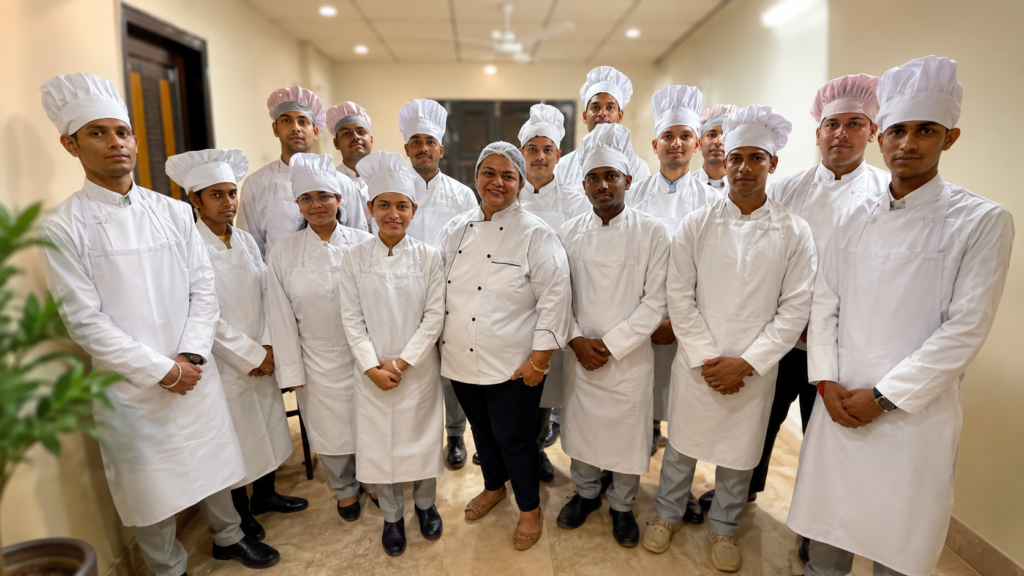
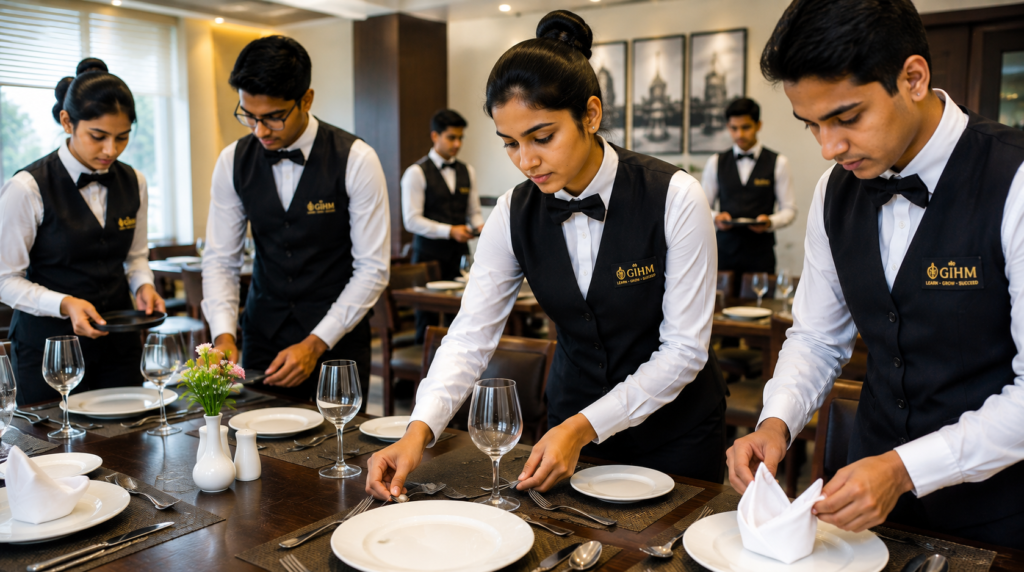
Food Production vs Food & Beverage Service: Career Comparison Choosing between Food Production vs Food & Beverage Service is a common question for students who want to build a career in hotel management and hospitality. Both areas are essential parts of hotel operations, but they involve very different responsibilities, skills, and working environments. Food Production focuses mainly on preparing food, managing kitchen operations, maintaining food quality, and developing culinary skills. Food & Beverage Service focuses on serving guests, restaurant operations, communication, and creating a positive dining experience. Neither career path is automatically better. The right choice depends on your interests, personality, strengths, career goals, and the type of hospitality environment you enjoy. For students studying hotel management, understanding the difference between these two departments can make it easier to choose where to focus their practical learning and future career development. Food Production vs Food & Beverage Service: What Is the Difference? The basic difference between Food Production vs Food & Beverage Service is simple: Food Production is primarily concerned with preparing food, while Food & Beverage Service is primarily concerned with presenting and serving food and beverages to guests. However, both departments involve much more than these basic descriptions. Food Production professionals work behind the scenes in professional kitchens. They prepare ingredients, follow recipes, maintain hygiene, manage kitchen equipment, coordinate with other kitchen team members, and ensure consistency in food preparation. Food & Beverage Service professionals work more directly with guests. They may welcome customers, explain menus, take orders, serve food and beverages, respond to requests, and coordinate restaurant or banquet operations. The two departments work together closely. A successful dining experience requires both quality food and professional service. What Is Food Production in Hotel Management? Food Production is one of the core areas of hospitality education. It covers the practical and theoretical aspects of preparing food in professional environments such as hotels, restaurants, resorts, catering operations, and other food-service businesses. Students may learn about: Food preparation Cooking methods Kitchen organization Ingredients Menu planning Food safety Hygiene Kitchen equipment Bakery and confectionery Portion control Food presentation Kitchen cost control Professional kitchens require discipline and teamwork. Food must often be prepared within specific time limits while maintaining consistency and quality. Students interested in culinary careers can therefore benefit from developing strong practical skills rather than relying only on theoretical knowledge. What Is Food & Beverage Service? Food & Beverage Service focuses on delivering food and beverage experiences to customers. Professionals in this department can work in: Hotel restaurants Fine-dining outlets Cafés Banquet departments Catering operations Bars and beverage-service areas where applicable Events and hospitality venues Students may learn about: Restaurant service Table setup Menu knowledge Guest interaction Order taking Food presentation Beverage service Banquet service Customer service Service standards Restaurant operations The department requires a combination of communication, confidence, product knowledge, attention to detail, and teamwork. Food Production vs Food & Beverage Service: Main Responsibilities The responsibilities of each department are different. Food Production Responsibilities Food Production professionals may be responsible for: Preparing ingredients Cooking food Following recipes Maintaining kitchen hygiene Operating kitchen equipment Checking food quality Managing preparation schedules Coordinating with kitchen staff Maintaining food safety standards Supporting menu preparation At senior levels, culinary professionals may also become involved in menu planning, staff management, purchasing, costing, and kitchen administration. Food & Beverage Service Responsibilities Food & Beverage Service professionals may handle: Welcoming guests Preparing dining areas Taking orders Serving food Serving beverages Explaining menu items Responding to guest requests Handling service concerns Coordinating with the kitchen Supporting banquet and event operations At supervisory and management levels, responsibilities can expand to team management, service planning, inventory, cost control, training, and outlet operations. Food Production vs Food & Beverage Service: Skills Required Both departments require professional skills, but the emphasis is different. Skills for Food Production Students interested in Food Production should work on: Cooking skills Creativity Attention to detail Time management Food safety awareness Knife skills Teamwork Discipline Ability to work under pressure Consistency Professional cooking requires repetition and practice. A student may know a recipe theoretically but still need considerable practical experience to perform consistently in a busy kitchen. Skills for Food & Beverage Service Students interested in Food & Beverage Service should develop: Communication Customer service Confidence Active listening Product knowledge Professional appearance Problem-solving Patience Teamwork Multitasking Service professionals need to understand both hospitality and customer expectations. Which Career Is Better for Creative Students? If you enjoy creativity through cooking, presentation, ingredients, and menu development, Food Production may be particularly attractive. Culinary professionals can express creativity through: Food presentation Recipes Flavours Cooking techniques Menu concepts Bakery and pastry work However, creativity in professional kitchens must be balanced with consistency and standards. A dish needs to look and taste consistent even when it is prepared repeatedly. Food & Beverage Service also involves creativity, particularly in restaurant presentation, event service, table arrangements, guest experiences, and banquet operations. Which Career Is Better for Students Who Love Talking to People? If you enjoy meeting guests and communicating throughout your working day, Food & Beverage Service may be a natural fit. Service professionals interact with customers and need to understand their preferences, answer questions, respond to requests, and maintain a welcoming environment. Food Production involves less direct guest interaction because much of the work happens in the kitchen. That does not mean communication is unimportant in Food Production. Kitchen teams depend heavily on clear communication and coordination. Food Production vs Food & Beverage Service: Work Environment The working environments are significantly different. Food Production Work Environment Food Production professionals generally work in kitchens. The environment may be: Fast-paced Hot Physically active Team-oriented Time-sensitive Highly structured During busy service periods, kitchen teams may need to prepare many orders within a limited amount of time. Students should understand that culinary work can be physically demanding and requires discipline. Food & Beverage Service Work Environment Food & Beverage Service professionals typically work in restaurants, dining rooms, banquet spaces, cafés, and hospitality venues. The environment may involve:

Scroll to Top